
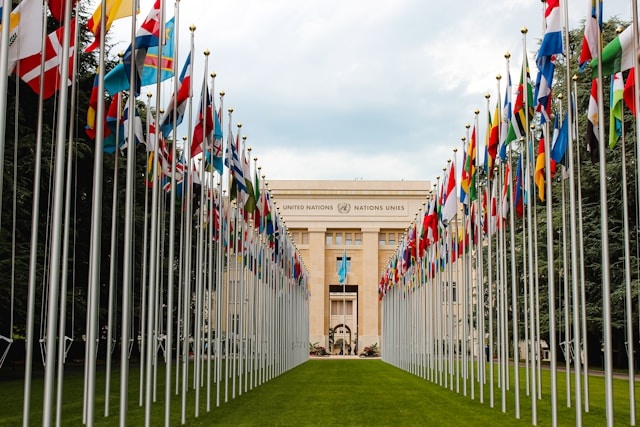
69 UNDP projects are reported to have started in July/August 2025, for a total budget of ~$30m and average duration a little below 2 years.
(source: UNDP Transparency Portal as of 19th September 2025; Photo by Mathias Reding)
Largest project by budget: Iraq’s Anti-Corruption and Arbitration Initiatives for Environmental Justice
The ACAI II project ($5.4m funded by the European Commission) aims to fight corruption and promote good governance in Iraq, with a special focus on environmental justice, transparency, and accountability. The project employs a supply-and-demand strategy:
Supply-Side: Strengthen regulatory and institutional capacity of anti-corruption and judiciary bodies, while promoting the voice and capacity of vulnerable groups.
Demand-Side: Generate public demand for integrity by supporting civil society organizations, media, and community groups to act as independent anti-corruption watchdogs.
“Leave No One Behind” (LNOB) in Governance and Economics
LNOB is a key lens, particularly for gender, youth, and minority rights.
Gender and Political Power: The “Increased Voice for Women in Political Processes” (Papua New Guinea) project targets political representation at high levels, while the “Regional Leadership Course Gender in Energy and Climate” (Panama Regional Center) integrates gender equality into the strategic green sectors of the future.
Inclusion of Marginalized Groups: The “HIV Inclusive Governance Phase II” (Sub-Saharan Africa) is a specific, targeted intervention to support the inclusion of LGBTI people in governance, reflecting a deep commitment to human rights and minority protection (SDG 16).
Digitalization and AI Policy (The New Frontier of Governance)
Digital now integrated into governance and development.
UNDP are directly tackling the integration of Artificial Intelligence (AI) into governance through policy. The “Policy Lab: Participatory Governance for Resilient Refugees and AI-Inclusive Society” (Armenia) is a novel, forward-looking project that explicitly links AI literacy, marginalized groups (refugees), and participatory policymaking.
Focus on Data Systems: Projects like “Data for Policy and Impact” (Nigeria) and “Fortalecimiento operativo del Instituto Nacional de Estadística (INE)” (Honduras) show a foundational focus on strengthening national data infrastructure for evidence-based policymaking across all sectors.