
The Democratic Republic of Congo and UNDP launched a project in May 2025 to strengthen its capacity to implement its climate commitments and participate in carbon markets. The initiative, funded by the Central African Forest Initiative (CAFI) and the UNDP, seeks to improve institutional governance, develop regulatory frameworks for carbon markets and enhance public awareness and multi-stakeholder dialogue. The ultimate goal is to mobilize climate finance to reduce deforestation and degradation while promoting sustainable development.
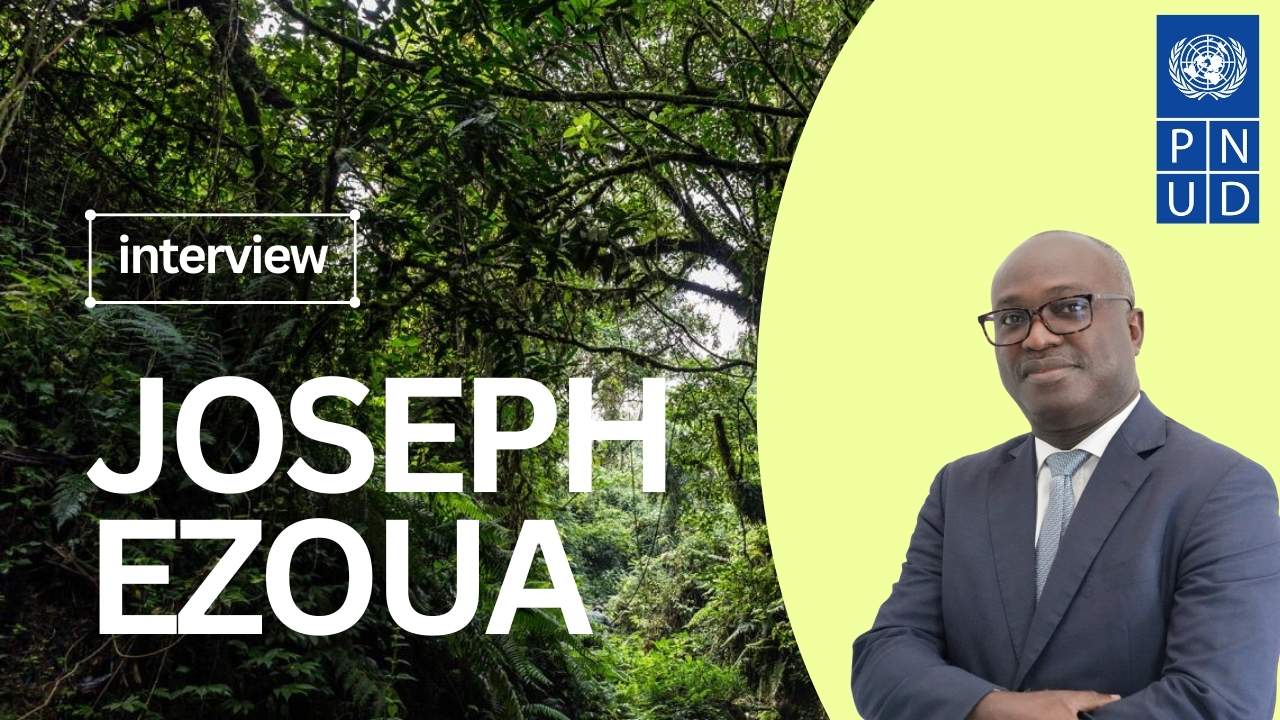
To gain firsthand insights into the project’s strategy and implementation, we spoke with Joseph Ezoua, Team Leader & Programme Manager at UNDP DRC. His perspective sheds light on the practical steps being taken to develop the carbon markets and support the country’s climate goals.
Q1 – Institutional Sustainability and Capacity
Lead32: What specific mechanisms have you built into the project design to ensure that new institutions will remain functional and well-staffed beyond the 36-month project period?
Mr Ezoua: “Through this project, UNDP is establishing mechanisms to ensure the sustainability of institutions like the National Authority for Carbon Markets (ARMCA) and the Sustainable Development Department of the Ministry of Environment. The objective is to maintain their functionality, staffing and alignment with national priorities beyond the project duration. Our strategy prioritizes institutional ownership and government commitment by embedding these entities into governance systems and integrating them into national policies. Key measures include:
- Capacity strengthening: Develop robust institutional frameworks, provide technical training, improve administrative efficiency, and offer competitive benefits, professional development, and mentorship programs to reduce turnover and promote knowledge transfer.
- Institutional ownership: Formally embed institutions into governance systems with clear mandates in legal and policy structures, aligning with national climate goals while fostering government ownership.
- Stakeholder engagement: Strengthen collaboration with governments, private sectors, civil society and local stakeholders to enhance transparency, accountability and shared success.
- Financial sustainability: Create revenue models (e.g. carbon market fees), secure state funding and diversify finance sources through partnerships and international funds.
- Monitoring and evaluation: Introduce tracking systems to address risks, such as staffing or funding gaps, and adapt strategies as needed.
- Exit strategy: Shift from donor reliance to local funding using public-private partnerships, resource allocations and government budgeting.”
Q2 – Balancing Speed with Foundation-Building
Lead32: Carbon market development typically takes many years to establish properly. Within the project’s 36-month timeframe, how are you prioritizing which foundational elements to establish first, and what’s your strategy for managing the tension between donor expectations for quick results and the longer-term institution-building that carbon markets require? Are there any elements you might defer to a potential Phase 2?
Mr Ezoua: “The project aims to build a solid foundation for sustainable carbon market development by:
- Establishing national infrastructure, including a carbon registry, benefit-sharing systems, and a complaints mechanism, to ensure transparency, equity, and efficiency.
- Developing policies for carbon credit creation, certification, and Measurement, Reporting and Verification (MRV) systems to align with global standards and ensure market credibility.
- Strengthening the technical capacity of ARMCA and stakeholders to manage regulatory, operational, and technical aspects effectively.
- Raising stakeholder awareness of carbon markets’ potential to mobilize financial resources for sustainable development.
It balances quick donor-driven results with long-term institution-building by setting short-term targets, creating enabling infrastructure, aligning markets with NDC goals, and embedding efforts into the national agenda.”

“In Phase 2, the project will scale carbon markets by promoting inclusive jurisdictional approaches, expanding into sectors like energy, waste, and agriculture, and developing advanced transaction systems for smoother international market integration.”
Q3 – Community Agency and Benefit Distribution
Lead32: The project emphasizes stakeholder participation, which is crucial for legitimacy. Can you elaborate on how you’re ensuring that Indigenous peoples and forest-dependent communities have genuine decision-making power in carbon project development — not just consultation rights? And given the complexities of DRC’s governance context, what safeguards are in place to prevent the concentration of carbon revenues among urban or political elites rather than reaching the communities who are actually managing the forests?
Mr Ezoua: “The project ensures that indigenous peoples and forest-dependent communities have real decision-making power in carbon market development. This is done by respecting their rights through Free, Prior, and Informed Consent (FPIC) and strengthening their voice through groups like the REDD+ Climate Working Group (GTCR-R) and the Indigenous Peoples Network (REPALEF). Communities are directly involved in deciding how carbon revenues are shared, giving them control over how funds are used. Training programs help these communities participate actively and make informed choices.
To avoid revenues being controlled by urban or political elites, the project includes safeguards such as: transparent financial systems led by communities, legal protections for fair benefit-sharing, independent oversight, grievance mechanisms, community representation in decisions and publicly shared reports for accountability.”
Q4 – What keeps you up at night?
Lead32: Every project has vulnerabilities — where do you see the biggest risk of failure or unintended consequences in this one? What part keeps you up at night and how are you trying to mitigate that?
Mr Ezoua: “The project faces risks such as unfair capture of carbon revenues, community exclusion, gaps in technical knowledge, and land disputes. To address these challenges, the project employs transparent governance systems, independent audits, and decision-making led by communities through FPIC, supported by networks like GTCR-R and REPALEF.
Capacity-building initiatives and partnerships with international experts help close technical and institutional gaps. A phased approach ensures short-term progress aligns with long-term development goals, while clear legal frameworks protect land and carbon rights to minimize disputes.
While issues like revenue mismanagement and land disputes remain concerns, the project’s strong safeguards promote fairness, transparency, and equitable outcomes, ensuring Indigenous peoples and forest communities remain central to its mission.”
Q5 – Learning from the Past
Lead32: How have past REDD+ or carbon credit projects in the DRC — both the successes and breakdowns — influenced your design choices for this initiative?
Mr Ezoua: “The project design builds on lessons learned from past REDD+ and carbon credit initiatives in the DRC, such as Jadora and Ibi Bateké, which struggled with challenges like weak engagement with national and provincial governments, lack of alignment with REDD+ tools, and limited community consultation through FPIC processes. These gaps caused misalignment with government priorities, reduced institutional support, and resistance from local communities.
To address this, the project takes an inclusive and collaborative approach: national and provincial governments are engaged early, ensuring alignment with REDD+ strategies, while systems like MRV (see infographic) and benefit-sharing are integrated to promote transparency and accountability. Meaningful involvement of Indigenous peoples and forest communities is achieved through improved FPIC practices, ensuring their rights and priorities are fully considered.

Inspired by the successes of the Ibi Bateké project, specifically its focus on community participation and phased implementation, the initiative emphasizes gradual progress and capacity building to reduce risks and improve long-term sustainability. By learning from past failures and successes, the project aims to deliver an equitable, transparent, and community-driven carbon credit system in the DRC.”
Q6 – Defining Success Beyond KPIs
Lead32: Looking five years ahead, beyond outputs and reports, what would real success look like for you? Not just in terms of carbon volumes or institutions launched — but in terms of confidence in the system, behavior change, or how DRC is positioned globally?
Mr Ezoua: “True success for UNDP in the DRC goes beyond carbon volumes or institutional milestones. It focuses on building trust and confidence in transparent, equitable REDD+ systems among communities, government institutions and global partners. Empowered forest communities would take ownership, protect their forests, adopt sustainable practices and benefit from alternative livelihoods.
On a national level, the DRC would stand as a leader in climate action, backed by strong institutions, clear legal frameworks and scalable carbon finance systems. Reduced deforestation secured land tenure and active global participation would cement its progress.
Ultimately, the DRC would inspire the world by balancing conservation, equitable benefits and global carbon market leadership, creating a legacy.”

Joseph EZOUA is a development expert with the UNDP, bringing over 20 years of experience. As the Inclusive Growth and Sustainable Development Team Leader at the UNDP DRC country office, he works closely with UNDP leadership, government counterparts, and stakeholders to tackle critical development challenges, including poverty reduction, social inclusion, climate change, resource management and sustainable finance. His focus areas include strengthening value chains, advancing REDD+ investments, driving energy transition and promoting sustainable land use.
Explore DRC UNDP’s Project Portfolio (Source:UNDP 14th September 2025)
