
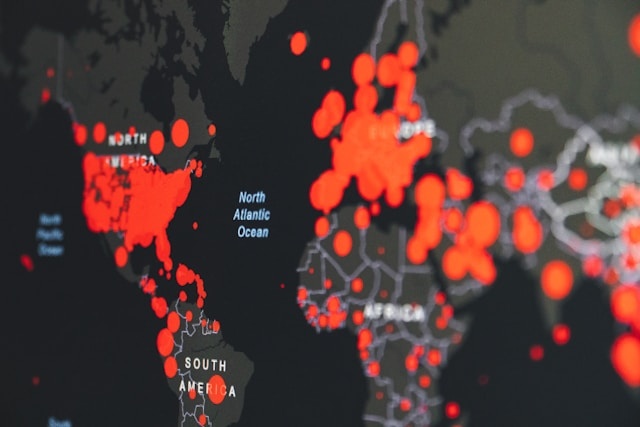
WHO’s “World Health Statistics 2025” report is the important analysis of global health trends reflecting the progress made, as well as the long-standing challenges, in the quest towards the Sustainable Development Goals (SDGs). The focus in this edition is on the disruptive effect the COVID-19 pandemic has had on the health progress from the previous two decades.
Shadow of the Pandemic on Healthy Longevity
Between the years 2000 and 2019, global healthy life expectancy (HALE) at birth improved remarkably by 5.4 years due to decreased mortality from communicable and perinatal diseases in children under age five, as well as noncommunicable diseases (NCDs) in individuals aged over 30. The progress, nonetheless, with the COVID-19 pandemic revoked it spectacularly, erasing as much as 1.8 years in healthy life expectancy from 2019 to 2021. The impact of the pandemic mainly resulted from direct and indirect causes primarily in people aged over 30. Excessive morbidity in the case of anxiety and depressive disorders also played an important role in the decrease in HALE in the specified time frame.
Inequitable Progress towards the SDG Health Targets
In spite of aggregate reductions in death rates across select SDG measures such as maternal, child, and infant mortality, premature death due to non-communicable diseases (NCD), death from injury, and death from WASH- and air pollution–associated causes, the report reports progress to be either decelerating or lagging in the case of all but three targets. The world is largely off-target to achieve such health-focused SDGs in 2030. There has been mixed progress in the battle against infectious diseases. Incidences of HIV have fallen, as have the number of people in need of interventions against neglected tropical diseases, but malaria has gone up since the year 2015, while hepatitis B and antimicrobial resistance remain important challenges. Likewise, progress in measures to decrease risk-element exposures such as malnutrition, tobacco smoking, unsafe WASH, air pollution, as well as violence against women and girls, is far from where it needs to be, although some progress is being seen. Interestingly enough, the globe is projected to meet the goal to decrease overall per-capita alcohol consumption to the tune of 20% in the year 2030, although performances differ in regions.
Triple Billion Targets: A Mixed Report Card
WHO’s “Triple Billion” targets for the period from 2018 to 2025
An additional one billion living healthier lives
An additional one billion individuals covered under universal health coverage without financial burden
An additional billion people who are better shielded from health crises
By the year 2024, the initial goal had already been surpassed, with an estimated additional 1.35 billion people living healthier lives. Nonetheless, the report predicts the targets under universal health coverage and protection against health emergencies will probably be missed. Only approximately 431 million additional people had gained universal health services without financial burden to date in 2024, while an additional 637 million people are likely to be better shielded against health emergencies. The uneven progress highlights the importance of stepping up efforts to achieve the wider health-associated SDGs in 2030.
Enduring Inequalities
Inequities in childhood immunisation continue to exist, especially with regard to economic status as well as maternal levels of schooling within countries. Although the trend in the past decade has remained upward in reducing inequalities in low-income as well as lower-middle-income countries, the goal of reaching equitable immunisation coverage needs targeted interventions in the urban poor, remote/rural settings, conflict-affected zones, as well as gender-based inequities.
The “World Health Statistics 2025” report indicates that although major progress in global health had been made prior to the pandemic, the COVID-19 pandemic resulted in the erosion of considerable achievements. The world is far from reaching many of the health SDGs and the Triple Billion targets in health through the year 2030. The report stresses the urgent need to have stronger leadership, expanded delivery, enhanced domestic financing in primary care, and health modernised information systems in order to bridge the gaps and make the health gains universal, equitable, and sustainable.
More detailed statistics and methods can be accessed in the complete report from the WHO website: